Showing posts with label End of School Activities. Show all posts

Thursday, July 21, 2011

The Beautiful Kinder-Garden

One of the most played up takes on Kindergarten is, of course, the Kinder "garden." Like most teachers I have planted the Kindergarden outside, but since I do not have a green thumb I am always more excited about plants and flowers I can’t kill.

I was always amazed at how much students grew in Kindergarten. Sometimes it seemed they just shot up over night! So a few years ago I started measuring kids during the first week of school. I would then cut a strip of green construction paper (about 2 inches wide) to their height. They would then decorate a large flower to put at the top of this green stem and finally add some leaves to the sides. Since I was the last room in the hallway, there was a stretch of about fifteen feet outside my door to the end of the hall that wasn’t really used. After our flowers were done, I would “plant” them outside in the hallway for the year. During the last few weeks of school I would measure the kids again and cut another strip of green construction paper to their height. This made their second stem. Again they would decorate a flower for the top and add leaves or other details. We would “plant” these flowers next to the ones from the start of school to see how much our garden had grown and at the end of the year the students took home both flowers from their “kindergarden.”

Thursday, June 23, 2011

Keeping Reading Skills Sharp is as Easy as A, B, C

Many of us have heard the research about the famous “summer slide.” While children from middle class families can actually gain skills over the summer, children from working class families can lose several months of learning in the few weeks we are out of school. These effects are amplified for children who may not speak English at home and can quickly lose the speaking and listening skills they have gained as well. Providing your students with a summer activity book or guide can help chase away any summer boredom and keep skills and knowledge fresh in children’s minds.

There are many places you can track down discount new or gently used books. Scholastic’s book order forms always have several $.99 books each month and lots of reading warehouses online sell paperbacks for even cheaper than that. A trusty favorite is always local yard sales or second-hand stores, such as Goodwill - often you can find brand new books for pennies. Sending students home with several books over the summer is no guarantee they will read, of course, but just providing the books presents the opportunity and reading only six books may help with the summer slide effects.

You can also provide students with the materials and resources to support their writing development. Young children can use chalk or a paintbrush and water to practice writing their letters, simple words or short sentences on pavement or a sidewalk. At the end of the year I publish a directory of each child’s name, their phone number, and their address in the summer book (with parent permission of course). Then I send home paper and envelopes and encourage the child to write letters to their friends, just like they did in the post office center during the year. I also send a letter to each child to guarantee they have at least one piece of mail with their name on it.

If kids have access to a computer and internet, share with parents some free, quality websites such as Starfall.com or PBS’ Kids which has videos, stories, games, and tons of other activities to keep kids minds’ moving. In addition to books and materials, I photocopy sets of letters, high frequency word lists, simple early literacy games, and other materials to put in a summer activity bag for students to take on the last day of school. Inside are directions for parents about the activities and a short explanation about why it is important to continue learning even once school is out for the year. Parents are often looking for ways to keep their kids busy so hopefully in those moments they will grab the bag and get to work!

Wednesday, June 22, 2011

Keeping Math Skills Sharp is as Easy as 1, 2, 3

Like reading, it is easy to keep math skills sharp over the summer break. Children can play the color game in the car, find shapes in their world and remember the shape names, sort objects such as shoes and socks or laundry colors, count forks for dinner or the number of steps to the car, make patterns with household objects, and draw patterns outside in the dirt or on the sidewalk.

Math vocabulary can stay fresh, too. In the summer activity bag that I give each child on the last day of school, I provide parents a list of key math terms to try to use around the house. Parents can play simple math games with their children using positional vocabulary or measurement skills. Saying things such as “I spy something over the table.” or “I spy something larger than my shoe.” supports students while they have fun at the same time.

The grocery store is another place to keep learning moving – colors, shapes, money - it’s all here! You can provide parents with simple grocery store activities or problem/sentence starters to keep their kids busy and learning in the store. In the car families can play the number game. Before getting in the car, each player picks something they will look for during the ride. It could be stop signs, people walking, blue cars, or hard items to spot such as license plates with the letter “Z” or people riding their bike. During the ride, each player calls out when they see their item and keeps track of the total number of items spotted. The winner is the person who has the most at the end of the trip.  

As adults, we know that math is everywhere from telling time, to cooking, to shapes in our world. The foundational math knowledge children are learning in the primary grades is easily transferred from school to home and you can help empower parents to make this happen.


Tuesday, June 21, 2011

Be In It To Win It!

Like most teachers I am a bit of a hoarder. I refuse to throw away anything, anything I might need in the future. Therefore, when I moved classrooms three times in three years I thought my husband might let me go. (He was really excited when I managed to stay in the same place for two years in a row!) It really was a little hard to believe how much stuff I had saved. What’s strange though is I am exactly the opposite at home - I can’t wait to throw things away! I guess that’s one of the paradoxes of being a teacher.

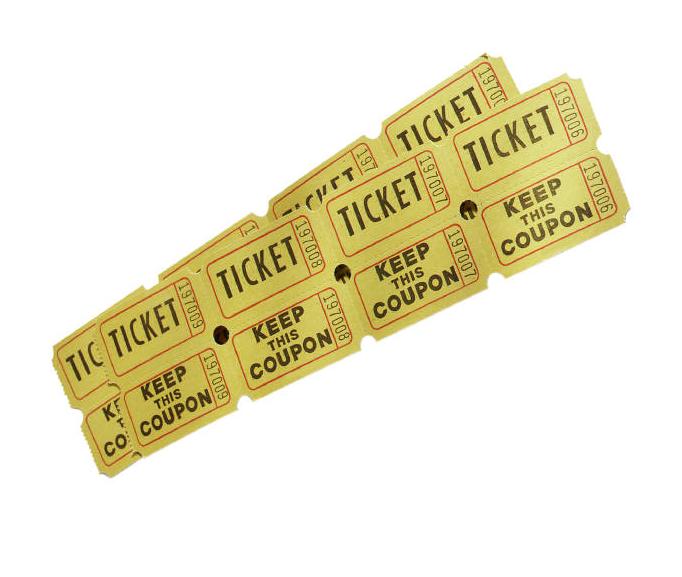
Despite my hoarding tendencies, I don’t like to have to pack up loose items at the end of the year. (This is probably also because I love buying new supplies over the summer!) Starting about a month or so before school ends, I start passing out tickets to students for various reasons – answering a really tough question, being a good friend, remembering to read their take home reader, acting as a good citizen, etc. During the last week of school, students write their names on the back of their tickets and drop them in my special flower pot. As I start to organize the room I start pulling together different items ranging from school supplies (pencils, crayons) to literacy tools (class books, interactive writing pages) and other items such as library stuffed animals or homemade class games and display them on the back counter. Over the last few days I start pulling tickets and allowing students to select items to take home as a Kindergarten memory. Not only does this help me to ensure students have the opportunity to take items home with them it also helps me keep my hoard under control!  

Monday, June 20, 2011

Read Alouds for the End of the Year

There are a ton of great books to celebrate the end of the school year. Two of my favorites are The Night Before Summer Vacation and Miss Bindergarten Celebrates the Last Day of Kindergarten.

The Night Before Summer Vacation is a spin-off on the classic poem, The Night Before Christmas. In this story a girl and her family are preparing for a fabulous summer vacation. Of course, as with any big summer vacation there are always things that can go wrong! One of the best parts of reading this book is the rhythm, rhyme, and meter that allows you to use a cloze format to complete each couplet. After reading the book, students can share their own summer plans and compare their stories with what happened to the little girl in the book.

The Miss Bindergarten series offers Kindergarten teachers the opportunity to read about important points in a Kindergarten year: the start of the year, Miss Bindergarten being out sick, taking a class field trip, the 100th day of school, and, of course – the wild day in Kindergarten! The final book for the year is Miss Bindergarten Celebrates the Last Day of Kindergarten. Just like Miss B brought in the year, we celebrate with Emily, Danny, and Franny as the fabulous class closes out the year with balloons, hugs, cards, and gifts.

The read aloud and book discussion is one of the quintessential pieces of Kindergarten – and there is no better way to finish out the year.

Friday, June 17, 2011

Tissues and Tears mixed with Excitement and Cheers!

The last day of school is always bittersweet. No matter how excited we are for summer, it is always sad to see the kids who have been such a part of our lives, and we have poured so much of our heart and soul into, leave for the next grade. Although they will always come back to visit you know in their heart they will have a new teacher to write notes to next year and to share their precious hugs with. Which, of course, is exactly how it should be.

When my kids leave on the last day I always like to send them away with a book, a poem, and a big hug. This is my favorite end of year poem and you can find it all over the internet, although I think we all think of it as “ours”:

            You are a very special person
            And you should really know,
            How I loved to be your teacher,
            How fast the year did go.

            Please come back to visit me
            As through the years you grow,
            Try hard to learn all you can,
            There is so much to know.

            One thing I tried to teach you
            To last your whole life through,
            Is to know that you are special,
            Just because you’re you!!!

            Good Luck in Grade One,
            I am very proud of you!  

Thursday, June 16, 2011

Just a Little Pomp and Circumstance

Even if your school does not have formal graduation for the end of the school year, you can make mortar boards or graduation caps for your kids to proudly wear home on the last day. Start by taking a large piece of colored construction paper. Cut a square from the page, usually between 8” by 8” and 12” by 12” is fine. This is the top of the hat.

Then cut long strips of the same color construction paper. Although the length does not matter, they should be at least 2 ½ to 3 inches wide. Measure the strips to fit around the top of the graduate’s head. If the strips are not long enough you can glue or staple them together until it is the correct length. Make sure to overlap the ends by about an inch or so.

Then take the measured strip and cut v-shaped notches every inch or two inches down the strip. The notch should be about 3/4 of an inch to 1 inch deep. Fold the notches over and place drops of glue on the folded edges. This is how you will attach the strip of paper to the top part of the hat. White glue or a glue stick works, but if you want to make sure the paper sticks, hot glue works best. Just make sure to keep the hats out of little hands until the glue dries.
 
You can make a tassel using yarn, string, or you can even buy tassels at most craft stores. These can be attached using a brad to the top of the mortar board – and presto – a graduation cap.

Instructions on how to make simple mortar boards can also be found at ehow.com and Enchanted Learning.

Wednesday, June 15, 2011

Sunshine and Summertime

A hot, yellow sun is one of the clear signs of summer. One way to let students share their excitement about the summer months ahead is to let each child write a “sun ray” about their plans. Start by making a large, friendly sun out of construction or bulletin board paper. Decorate the sun with sunglasses or a glass of cool lemonade to help with those hot summer months.

Make a ray for each child in the class. Sun rays can be made from cutting sheets of construction paper into strips. Depending on the age of the students, you can make the strips any width you need. Allow each child to write a sentence about summer on their strip. Attach the strips to the sun. For added effect you can gently curl the ends of the rays by wrapping them around a pencil or pen and then releasing them.

Because remember, summer is just a few “rays” away!

Saturday, June 11, 2011

The ABCs of a Kindergarten Year

Throughout the year, we worked to create enough class big books so each child would have one to take home at the end of the school year. The last class big book we made was the The ABCs of Kindergarten.  

To start the project I wrote down the side of a large piece of chart paper the letters of the alphabet. As a class, we brainstormed different things we had done this year, topics we had learned about, parts of our day, or special events that started with each letter. We tried to make sure we had at least one thing for each letter. At times we had to get creative, such as eXtra ____ for X, but most times we ended up with at least several ideas for each letter.

Each child would select a letter to illustrate for our big book. If they choose a letter with multiple ideas, they could pick their favorite one. So for example, if M had math and music, he or she only picked one to illustrate and write for the book.

After each child completed their page (usually a 12x18 sheet of cream construction paper) by writing the word or phrase (”going to the zoo” or “reading”) and illustrating that idea, I laminated the pages, punched holes in the side, and attached the pages together in alphabetical order to form our final class big book, The ABCs of Kindergarten. Over the years I found that the metal rings that you can buy at any office supply store were the easiest way to bind the books together.  

The book joined the other class big books in the library, where the children loved to read their own work, and on the last day of school, each child was able to select a class big book to take home with them to remember their time in Kindergarten.

Friday, June 10, 2011

Piecing Together School Memories

With the year wrapping up and hot weather in the air, it is easy to start drifting into summer before the school year is even over. One of my favorite things to do at the end of the year was discuss with the kids all their favorite things we had done over the year. Just like you bring closure to each day, it is important to wrap up the year as well.

One way to not only help kids remember all the wonderful things they’ve done this year, but also to share with the school community, is to make a memory quilt. To make each quilt square, take two square pieces of construction paper: one colored and one white. The white square should be slightly smaller than the colored square so when the white square is glued onto the colored square it has a framing effect.


Each child can then decorate his or her quilt square with a favorite memory of the year. Students can draw stitch marks on the colored border to mimic quilt stitching. Depending on the number of students you have you can make a 4x5 quilt (20 squares), 4x6 quilt (24 squares), 5x5 quilt (25 squares), or a 5x6 quilt (30 squares). Teachers, assistants, and support teachers can fill in any extra spaces to make a perfect square. To display the quilt on a hallway wall, you can attach each piece to the wall or, if you are really adventurous, use yarn and a hole punch to “sew” the quilt squares together.

As you piece together your shared memories, it is always fun to hear what children remember and what special memories they will take with them from your room.